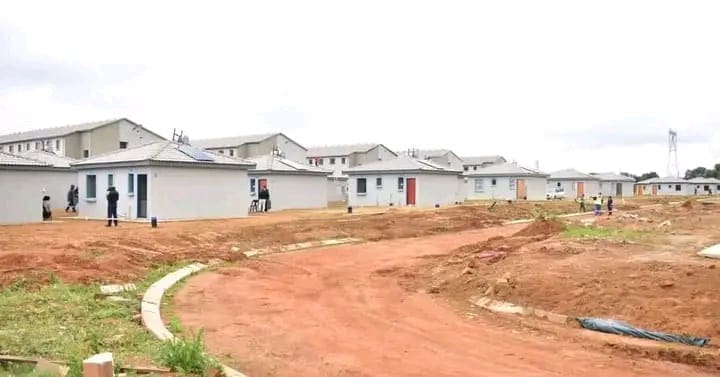


















Pictures: Gauteng Department of Human Settlements
The Gauteng Department of Human Settlements has warned residents not to fall victim to individuals or groups claiming they can influence the allocation of government-subsidised houses.
The warning follows what the department describes as a rise in social media videos in which individuals and organisations claim that housing allocations are taking place because of their lobbying, protests or pressure on government.
The department has dismissed these claims, stressing that no activist, organisation or individual has the power to move an applicant up the housing waiting list. According to the department, houses are allocated through an established process guided by its Housing Allocations Policy and overseen by a Joint Allocation Committee.
Residents seeking a fully subsidised RDP/BNG house must first register on the National Housing Needs Register through their municipality or Human Settlements office. When a housing project becomes available, applicants complete a subsidy application and undergo verification on the Housing Subsidy System.
The verification process considers factors including income, marital status, property ownership and whether an applicant has previously benefited from a government housing programme. Once approved, applicants are notified by SMS and taken through the pre-allocation process before completed and quality-assured homes are allocated.
The department emphasised that housing allocation is not simply based on a first-come, first-served system. Priority is given across different categories, with 40% allocated to beneficiaries who have been on waiting lists dating from 1996 to 1999, while 30% goes to approved beneficiaries who have not previously received an allocation.
Elderly households receive a 10% allocation, another 10% falls under the MEC’s discretionary allocations, while people with disabilities and military veterans each receive 5%. The department said the system is intended to ensure that vulnerable residents and qualifying beneficiaries are fairly considered.
Housing delivery continues
The department also rejected suggestions that recent housing handovers were the result of pressure from particular groups. It said completed homes are being allocated as quickly as possible to qualifying beneficiaries, partly to prevent finished properties from being invaded or hijacked while standing vacant.
During the current financial year, the department said it had already allocated 1 448 houses against a target of 1 000, while 1 333 houses were completed during the first quarter. Municipal engineering services were installed for 1 262 walk-up units, 488 serviced erven were released and 815 title deeds were issued.
The department also reported resolving 895 rental housing disputes and disbursing 43 subsidies through First Home Finance.
In the previous financial year, 7 976 houses were completed against a target of 7 503.
Residents urged not to pay for houses
Of particular concern to the department are scams targeting residents desperate for housing. It warned that no official, agent, activist or organisation can guarantee someone a house, fast-track an application or secure a place on the housing list in exchange for money.
Government-subsidised housing is free for qualifying beneficiaries. Residents have therefore been urged never to pay anyone promising a house or faster allocation, and not to hand over personal documents, ID information or banking details to people making such promises.
The department also encouraged residents to verify housing information through official Gauteng Human Settlements channels or their local municipal and Human Settlements offices. Anyone demanding payment or claiming to have control over housing allocations should be reported to the department or the South African Police Service.