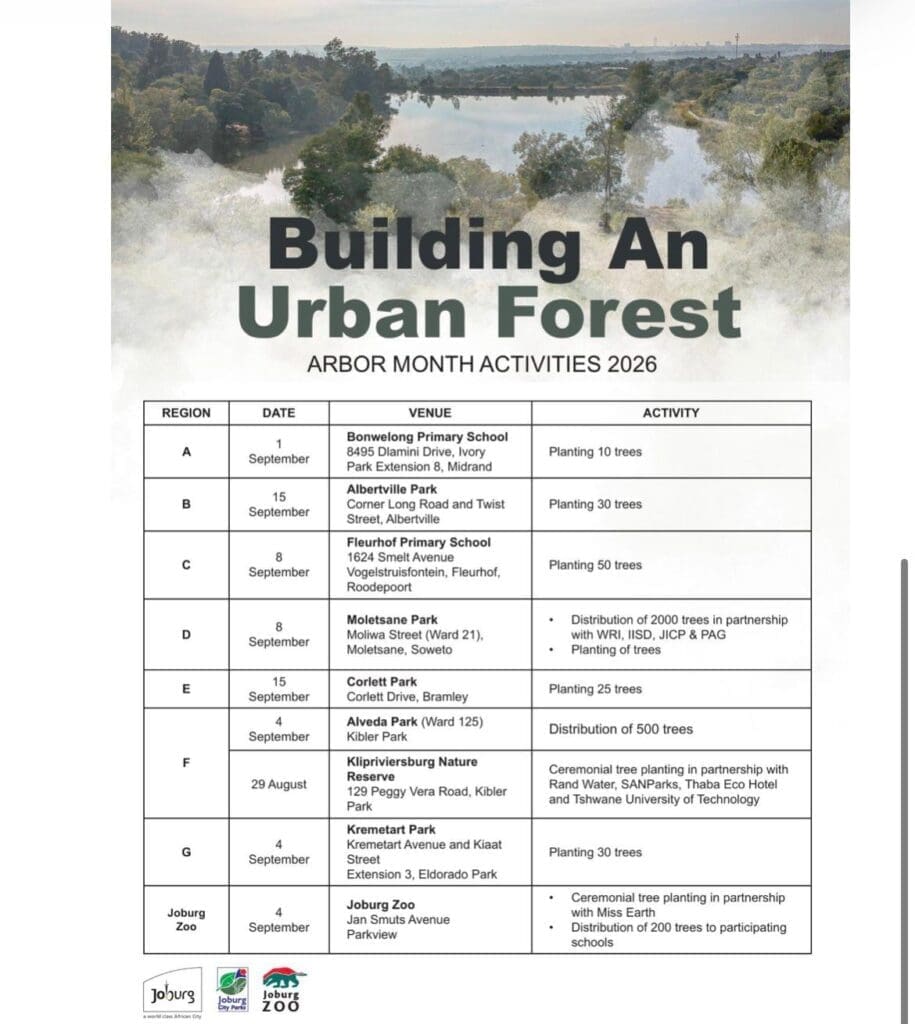















Johannesburg City Parks and Zoo (JCPZ) is calling on residents, schools, businesses and community organisations to take an active role in transforming the city’s green landscape as Arbor Month gets underway this September. The entity is encouraging communities across Johannesburg to plant indigenous and fruit trees throughout the month and to make tree planting part of a broader commitment to protecting the environment.
Observed annually in September, Arbor Month places the spotlight on the importance of trees and the role they play in creating healthier, greener and more sustainable communities. JCPZ believes the campaign should go beyond simply recognising the value of trees and instead inspire residents to take practical action by planting, nurturing and protecting them in their neighbourhoods, schools, workplaces and public spaces.
According to JCPZ, every tree planted is an investment in Johannesburg’s future. Trees absorb carbon dioxide, release oxygen and help filter pollutants from the air, contributing to improved air quality in urban areas. This is particularly important in a busy city such as Johannesburg, where traffic congestion and the illegal burning of chemical and other harmful substances can contribute to air pollution.
Thanduxolo Mendrew, Managing Director of Johannesburg City Parks and Zoo, highlighted the long-term value of community participation in greening the city. “Arbor Month reminds us that the simple act of planting one tree at a time can change our landscape. That small action today can provide shade, cleaner air, biodiversity and environmental benefits for decades to come,” Mendrew said.
The benefits of trees, however, extend far beyond cleaner air and attractive neighbourhoods. As communities across the world face increasingly frequent and severe weather events, including floods, droughts, heatwaves, wildfires and powerful storms, trees are becoming an increasingly important part of environmental resilience. Their roots help stabilise soil and reduce erosion, while their canopies can slow stormwater and provide much-needed shade and natural cooling during periods of extreme heat.
JCPZ noted that while planting trees cannot prevent natural disasters, a healthy and properly maintained urban forest can help reduce some of the environmental pressures associated with severe weather and support communities as they adapt to a changing climate. Expanding Johannesburg’s tree canopy can also contribute to cooler neighbourhoods, healthier public spaces and improved living conditions for residents.
Indigenous trees are particularly important because they are adapted to local environmental conditions and form an essential part of Johannesburg’s biodiversity. They provide food and shelter for birds, insects and other wildlife while helping to strengthen local ecosystems. Fruit trees can also offer additional benefits in suitable areas, including schools, community gardens and residential spaces where they can contribute to food-growing initiatives.
JCPZ is therefore encouraging communities to think carefully about the types of trees they plant and where they are placed. Planting the right tree in the right place can help ensure that it grows successfully without interfering with roads, pavements, buildings, underground infrastructure or electricity lines. The entity has also stressed that planting a tree is only the beginning. Young trees require regular watering, protection and ongoing maintenance if they are to survive and develop into mature trees capable of delivering long-term environmental benefits. Residents who take part in Arbor Month initiatives are therefore being encouraged to continue caring for the trees well beyond September.
Greening Johannesburg, JCPZ says, is a shared responsibility and cannot be left to one organisation alone. Residents, schools, businesses and community groups all have a role to play in improving the city’s green spaces. Schools can use tree-planting projects to teach environmental responsibility, while businesses and community organisations can support greening campaigns and help improve neglected public areas.
The campaign also comes at a time when urbanisation and increasing population density continue to place pressure on available land and natural spaces. Development and infrastructure expansion often compete with mature trees and existing habitats, making the protection and expansion of Johannesburg’s urban forest increasingly important. For JCPZ, Arbor Month is therefore not only about planting new trees but also about changing the way communities think about their environment. A single tree planted and cared for today can continue benefiting a neighbourhood for many years through shade, cleaner air, biodiversity and a more attractive public environment.
JCPZ will be active across Johannesburg throughout September as part of its Arbor Month programme and is challenging residents to come up with their own plans to contribute to the city’s greening efforts. The organisation hopes communities will move beyond simply celebrating trees and instead take practical steps to grow and protect them. The message for September is simple: plant a tree, nurture it and protect it. By turning awareness into action, Johannesburg can continue building a greener, healthier and more resilient city, one tree at a time.