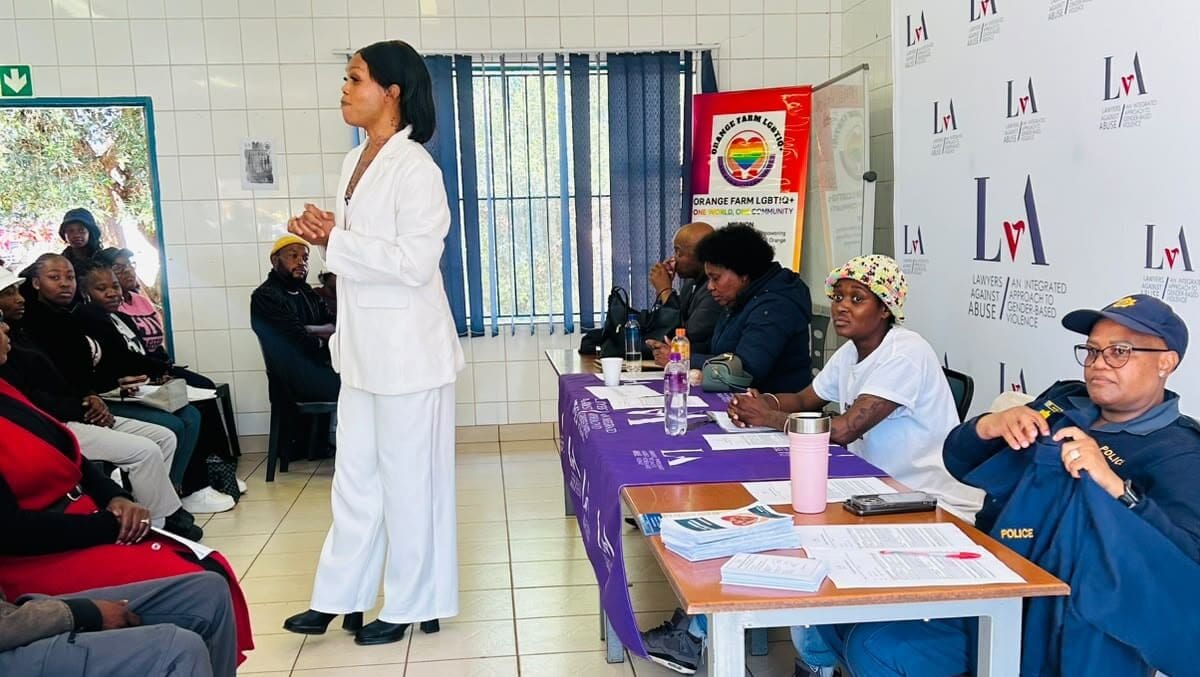
Community members in Orange Farm were encouraged to break the silence around gender-based violence, challenge discrimination and use the law to protect themselves during a dialogue held at the Orange Farm Skills Centre on 16 July.
The “Let’s Talk GBV & Law” dialogue, hosted by Lawyers Against Abuse (LvA) in partnership with Orange Farm LGBTQI+, brought residents together for honest conversations about abuse, legal rights and the challenges faced by vulnerable groups.
Instead of treating gender-based violence as a private matter, speakers urged residents to recognise warning signs, report abuse and support survivors without judgement. Participants were also introduced to legal services and support networks available to people experiencing violence or discrimination.
Held under the theme “Proud. Unified. Visible.”, the event created a space where LGBTQI+ community members and other residents could speak openly about stigma, safety and their experiences of seeking help.
Biotumelo Pinkoane from Lawyers Against Abuse said access to accurate information could help people make informed decisions and take action before situations become more dangerous.
“Knowledge is one of the strongest tools in preventing abuse. We want people to understand their rights, know where to seek help and feel empowered to take action when facing injustice,” said Pinkoane.
An Orange Farm LGBTQI+ representative Nkalimeng Sephapo said many people continued to experience discrimination in silence because they feared rejection, humiliation or further victimisation.
“Conversations like these are important because they challenge stigma and remind people that everyone deserves dignity, respect and protection,” Nkalimeng Sephapo said.
The organisers stressed that fighting GBV required more than once-off campaigns. They called for continued education, stronger community support systems and safe platforms where survivors could speak without fear.
For those in attendance, the dialogue was not only about listening to speeches. It was a reminder that knowing one’s rights, speaking out and supporting others could help turn vulnerable communities into safer and more united spaces.