







Teachers at two primary schools are demonstrating that mother tongue learning can overcome limitations.
At Laus Deo Primary and Lehae Primary School, teachers are demonstrating that language should never be a barrier to learning. In classrooms where children speak Isizulu, Sesotho, Tshivenda, Xhosa and Xitsonga at home, these educators are finding creative ways to turn challenges into opportunities and to build a lifelong love for reading.
As this graphic below shows, Gauteng Foundation Phase classrooms are among the most linguistically diverse in the country.
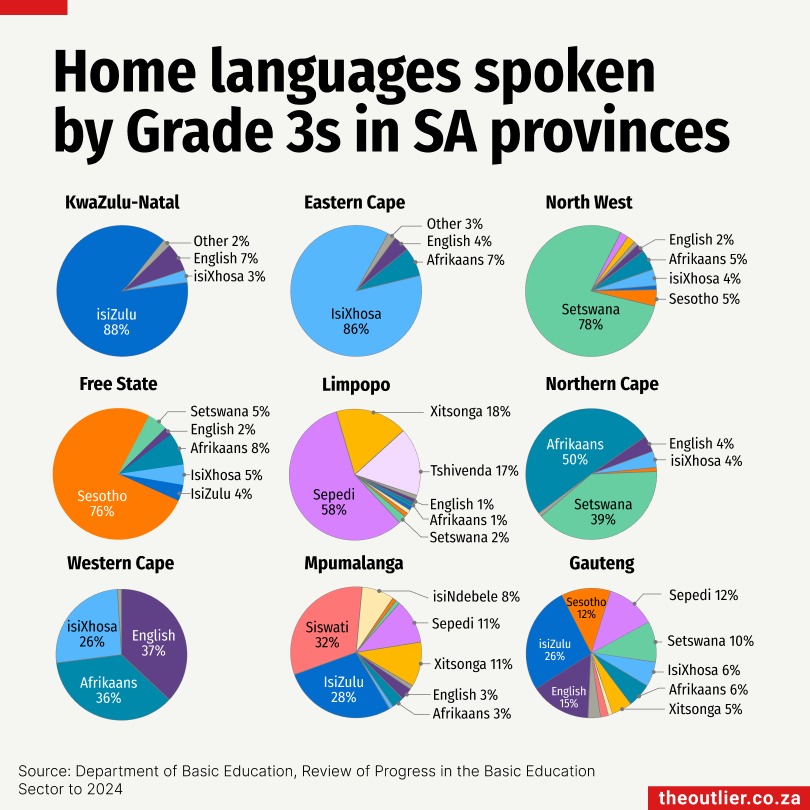
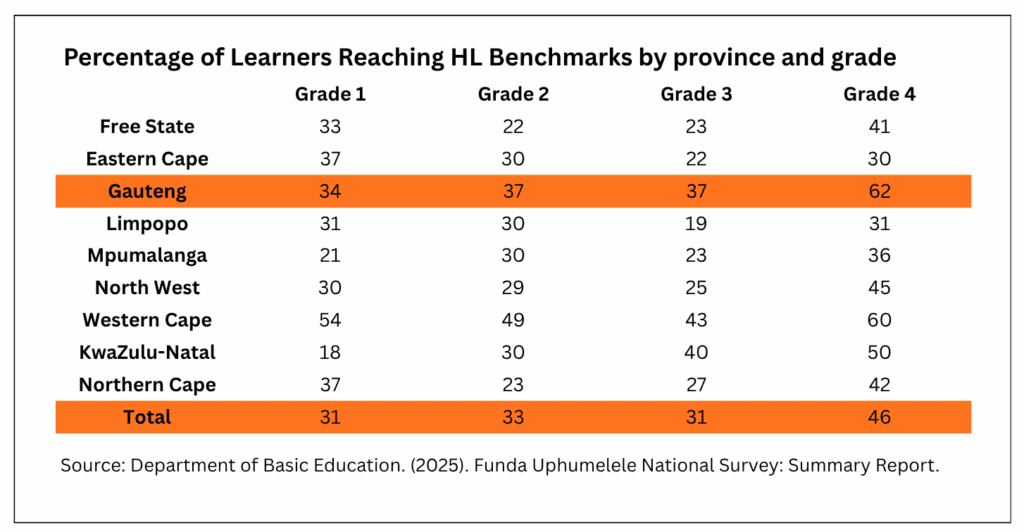
This linguistic reality means many Gauteng children enter Grade 1 speaking one language at home, but meet another language in class, a mismatch that often delays decoding, slows comprehension, and widens gaps by Grade 4. The Department of Basic Education’s Funda Uphumelele National Survey (FUNS) results released last week show that only 31% of Grade 3 learners nationally meet Home Language reading benchmarks.
As this graphic below shows, Gauteng’s improvement curve accelerates sharply from 37% in Grade 3 to 62% in Grade 4, the point at which most children shift to English as the language of learning. The survey observes that this improvement “may relate to the province’s linguistic diversity: children in Gauteng are more likely to attend schools and classrooms where a variety of home languages are spoken, which may pose unique challenges in the early grades”.
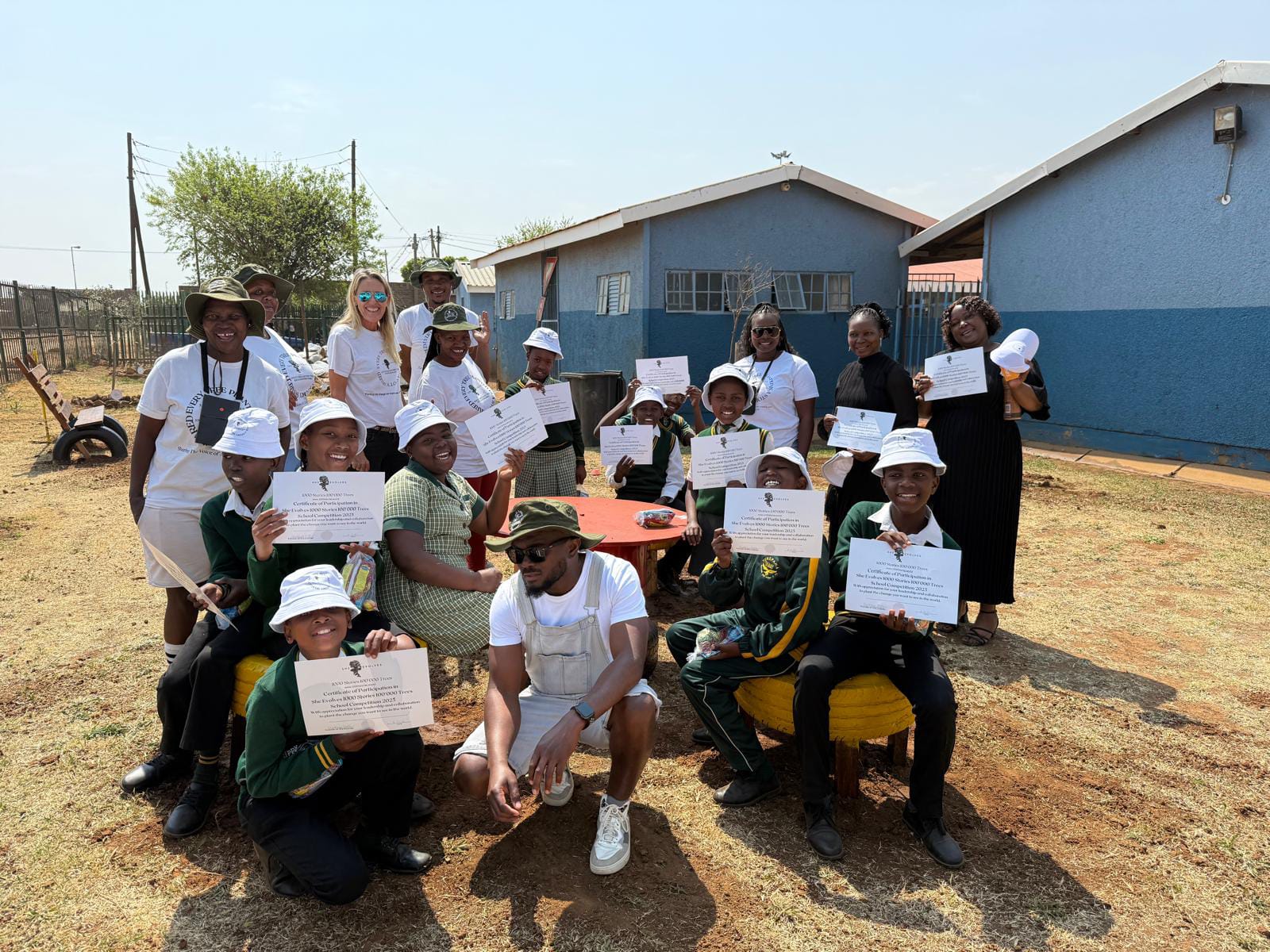
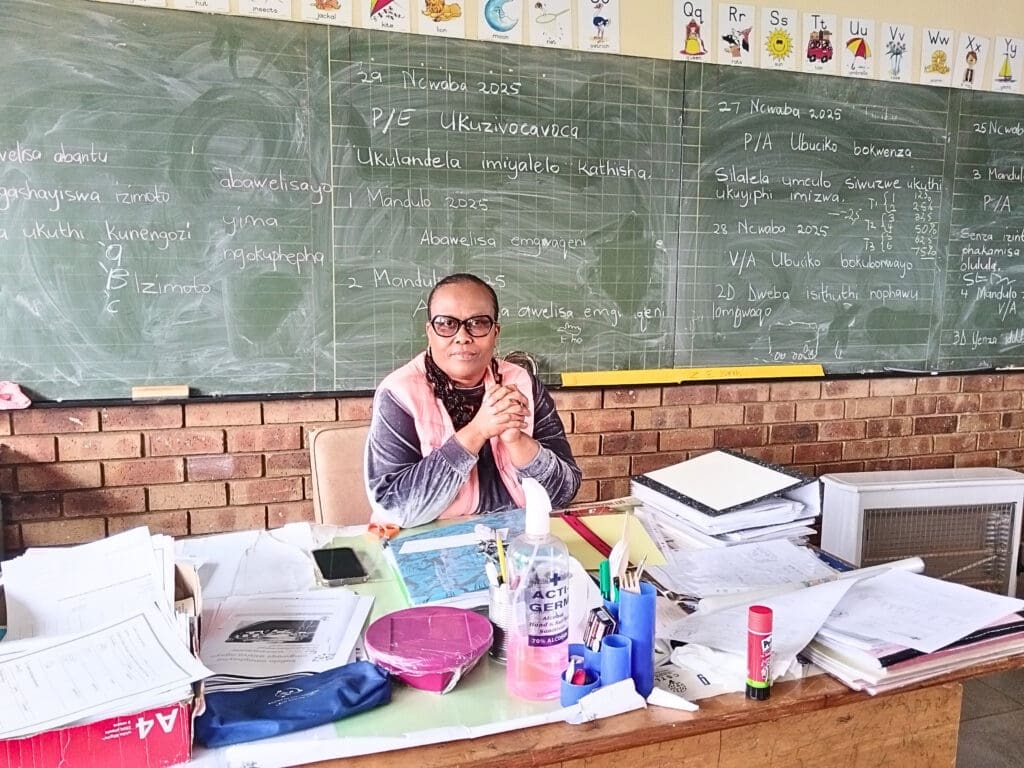
For many learners at Laus Deo Primary School in Orange Farm Ext 6a , the languages spoken at home, like Xhosa and Tshivenda, differ from the Isizulu and Sesotho taught in class – a reality that often slows reading development.
But teachers are transforming that obstacle into innovation. Laus Deo Primary’s isiZulu Head of Department, Thokozani Zungu who also teaches Grade 1s, explained: “We introduced a Drop All and Read initiative.
Every day, we dedicate time for learners to read aloud and practise language. It’s helping them gain confidence and understand better.”
Learners are grouped according to reading and comprehension levels, giving teachers the chance to support struggling readers while challenging the confident ones. Even with limited Isizulu and Sesotho storybooks, teachers share materials and swap resources to ensure no learner is left behind.
“We borrow from one another. It’s not ideal, but it works – because we’re committed to making learning easier for our kids,” Zungu added.
Regular workshops and teacher meetings identify gaps, share methods, and brainstorm creative ways to strengthen mother-tongue literacy. Their biggest wish? More books written in local languages. “We have seen how relatable stories help children connect to reading,” said Zungu.
Working with Zungu is Nelly Mpete, Head of Sesotho and a key figure in multilingual literacy initiatives. She leads the Sesotho stream in the Foundation Phase, supporting teachers of learners whose home language differs from the classroom language. Her straightforward yet impactful approach transforms language into a bridge rather than a barrier.
“Our learners come from homes where several languages are spoken. It’s not about choosing one language over another, but about helping every learner understand. We use translation, songs, and storytelling to make learning inclusive,” she said.
Mpete also coordinates peer reading circles where older learners read aloud in Sesotho to younger ones, creating mentorship moments and normalising reading in African languages. She believes that seeing one’s own language in print can change how children view reading itself.
Mpete added: “When learners read books that reflect their world and culture, their motivation grows. That’s why we’re calling on publishers and authors to produce more storybooks in their mother tongue. If this happens, more children across township schools will be inspired to learn – and even to teach – in their mother tongue. When children learn in the language they understand, comprehension deepens and confidence grows.”
From policy to practice at Lehae Primary
At Lehae Primary School in Lehae, Thulisile Anna Ngobese, a Grade 3 IsiZulu educator, explained that the school uses both isiZulu and Sesotho as languages of instruction in the Foundation Phase. The school has four Grade 3 classes – 3a, 3b and 3c for isiZulu and 3d for Sesotho with an average of 28 learners in Ngobese’s IsiZulu class.
Ngobese said teachers are seeing encouraging results from programmes like the Learning Recovery Improvement Programme (LRIP), a strategy backed by FUNS recommendations and aligned with the national move toward structured pedagogy.
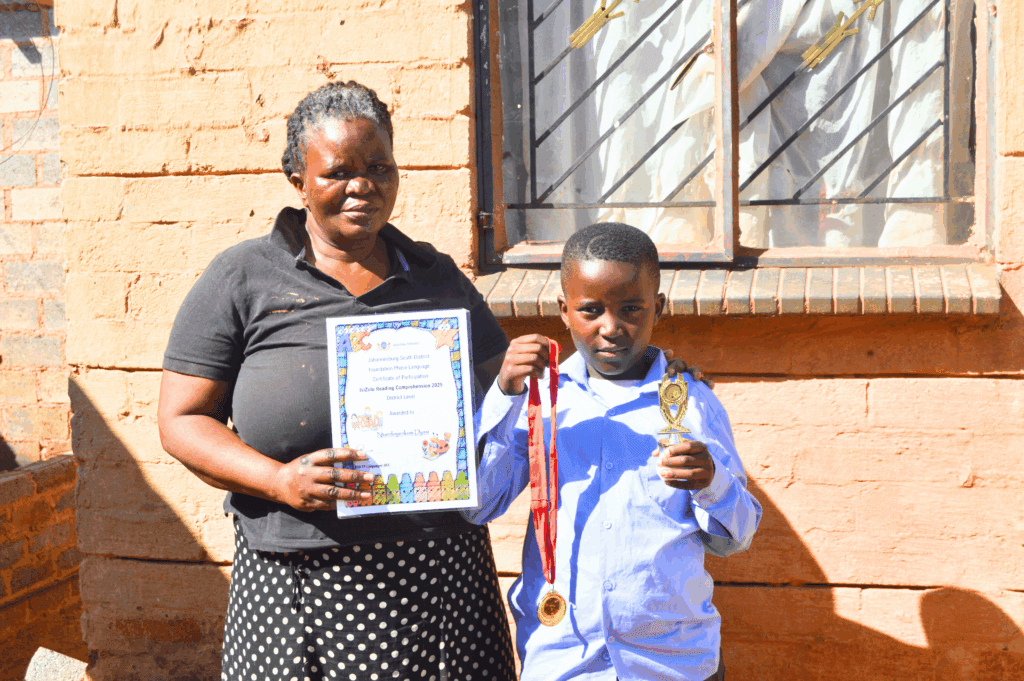
Grade 3 learner Ntandoyenkosi Diyase (8) is a notable success, winning first place in the Gauteng Department of Education’s district-level isiZulu Reading Comprehension competition in August. His teacher, Ngobese, said: “We are proud of Ntando, he is smart, a hard worker, he loves reading and always takes reading books home to sharpen his reading skills.” Ntandoyenkosi said the accolade made him happy: “I want to finish school and become an engineer. I enjoy learning English because it’s easy for me to understand. I won a trophy, a medal, and a certificate.”Ntando’s grandmother, Nokuzola Diyase, shared: “Our home language is isiXhosa, but he is learning in isiZulu and he excels in it. I’m proud that he won – it shows he’s going far in life. ”
Ngobese said: “Language barriers remain a challenge, as many learners speak a different home language from the one used in class, which is IsiZulu and Sesotho. Even when homework is given, there’s often no one at home to assist, as parents may not read or write the language taught at school. To support these learners, educators often squeeze homework writing during morning reading sessions.”
The shortage of reading materials was a big challenge, but lessons had improved thanks to LRIP lesson plans, of which Lehae is among 14 participating schools, said Ngobese.
The school uses a tiered reading approach to support learners at different levels. Ngobese said: “We assess each learner and start them on the book that matches their reading ability. I group books into three levels – what I call Book A for learners who need more support, Book B for those at a moderate level, and Book C for advanced readers. This helps each learner progress at their own pace and build confidence in their reading and comprehension. Our educators also receive ongoing support through workshops and we use practical strategies to make learning easier and more engaging.”
Why policy and reform matter
The innovative work at these two schools aligns with the findings of Professor Brahm Fleisch, education policy expert at Wits University and author of The Education Triple Cocktail: System-wide Instructional Reform in South Africa, which highlights three ingredients needed to improve early-grade literacy:
- Structured daily lesson plans
- High-quality language-specific learning materials
- Ongoing coaching and teacher collaboration
“Change at the instructional core happens when teachers adopt new daily routines, have access to the right materials and receive guidance and encouragement through ongoing support,” said Fleisch.
The challenge remains immense, with the latest FUNS national benchmarks revealing that only 31% of Grade 1 learners meet the Home Language Reading Benchmark of 40 correct letter sounds per minute, a foundational skill that signals decoding readiness.
Crucially, FUNS shows that 15% of Grade 3 learners cannot read a single word, placing them at the very bottom of the trajectory, where comprehension becomes almost impossible. There are significant inequalities in the likelihood of reaching benchmarks by language, province, gender and socio-economic status. Learners assessed in English were most likely to reach benchmarks, as were learners in the Western Cape and Gauteng, compared to other provinces. However, these advantages are largely attributable to the higher average socio-economic status of these groups.
These findings have refined national recommendations: FUNS emphasizes that improving early-grade literacy requires structured lesson plans, daily guided reading, graded mother-tongue books, and ongoing instructional coaching — interventions proven to double reading progress in studies like the Early Grade Reading Study (EGRS). These results have shaped regional and national policy programmes, with FUNS stressing that reform is vital for children to achieve the foundational fluency needed for comprehension by Grade 4, the gateway to future learning.
Fleisch argued that the DBE’s most effective reforms focus on improving what happens inside the classroom – the instructional core. Various policies that include the LRIP identify reading gaps early and provide direct support to teachers through coaching, clear lesson plans and bilingual learning materials. FUNS reinforces the principles that underpin these policies. By setting national benchmarks for letter-sound fluency and oral reading, FUNS provides measurable targets.
This approach mirrors what educators like Zungu, Mpete and Ngobese are already doing – finding creative, evidence-based ways to support literacy through structured lessons, collaboration and community involvement.
“When a child reads in a language they understand, they are not just decoding words, they are opening doors to every other subject and to a brighter, more equal future,” concluded Mpete.
This article is part of a series that has been produced with the support of the Henry Nxumalo Foundation. Read Part One and Part 2.