











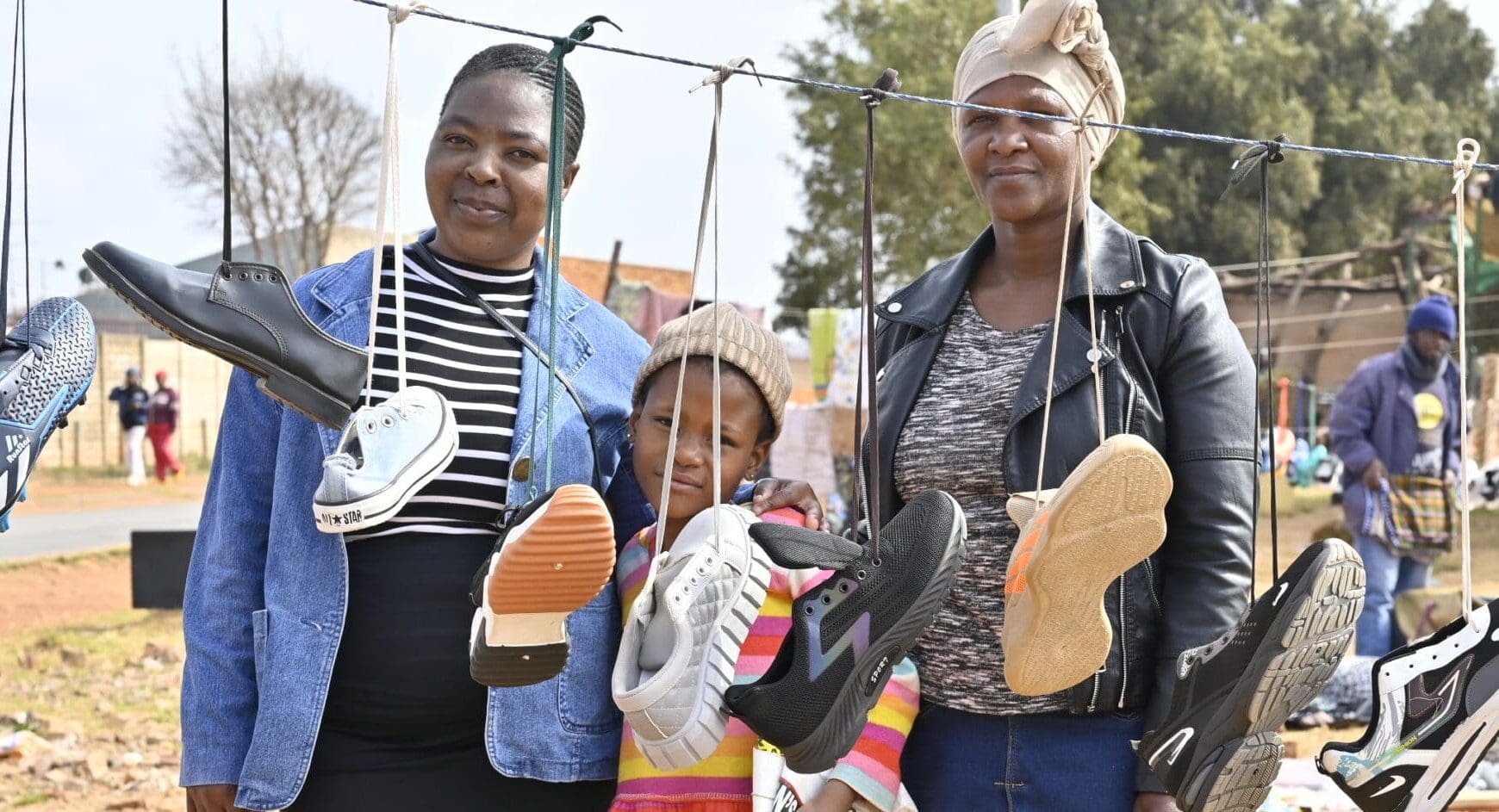
When learning happens in a child’s home language, every kitchen, garden or bedtime story becomes a classroom
Experts have long held that a key to reading success is not exclusive to the classroom, but in the everyday learning that happens at home.
This timely reminder of the role of community and parenting comes ahead of the release of vital research on Mother Tongue reading benchmarks and trends in the Foundation phase, by the Department of Basic Education on Monday, 10 November. The Funda Uphumelele National Survey (FUNS) findings introduce the country’s first national literacy benchmarks for African languages and provide data to track reading progress before learners reach Grade 4, a stage widely recognised as the make-or-break point for comprehension.
The research comes against the backdrop of a 2021 international PIRLS study, which found that 81% of Grade 4 learners in South Africa cannot read for meaning in any language.
The link between school and home is key to learning, according to the United Nations International Children’s Educational Fund’s (UNICEF) Child Friendly Schools Manual stated in 2009.
It reads: “Learning does not begin when children walk through the school doors, nor does it end when they exit for the day. It takes place all the time and everywhere, throughout life. Children are engaged in a continuous, dynamic process of bridging the world of school and the world of home and community. They learn from both worlds, facilitated by teachers, family members, neighbors and others. Linking schools and communities is widely recognised as good pedagogic practice.”
In South Africa, the 2016 Department of Basic Education’s School – Parent – Community Engagement Framework reminds us that education is a shared journey, where children “bridge the world of school and the world of home and community.” It explains that this bridge is largely influenced and sometimes restricted – by language. When children learn in a language different from the one spoken at home, they may find it hard to express ideas, grasp lessons, or connect school learning to everyday life. This doesn’t reflect a lack of ability or effort, but rather the limits imposed by language barriers.
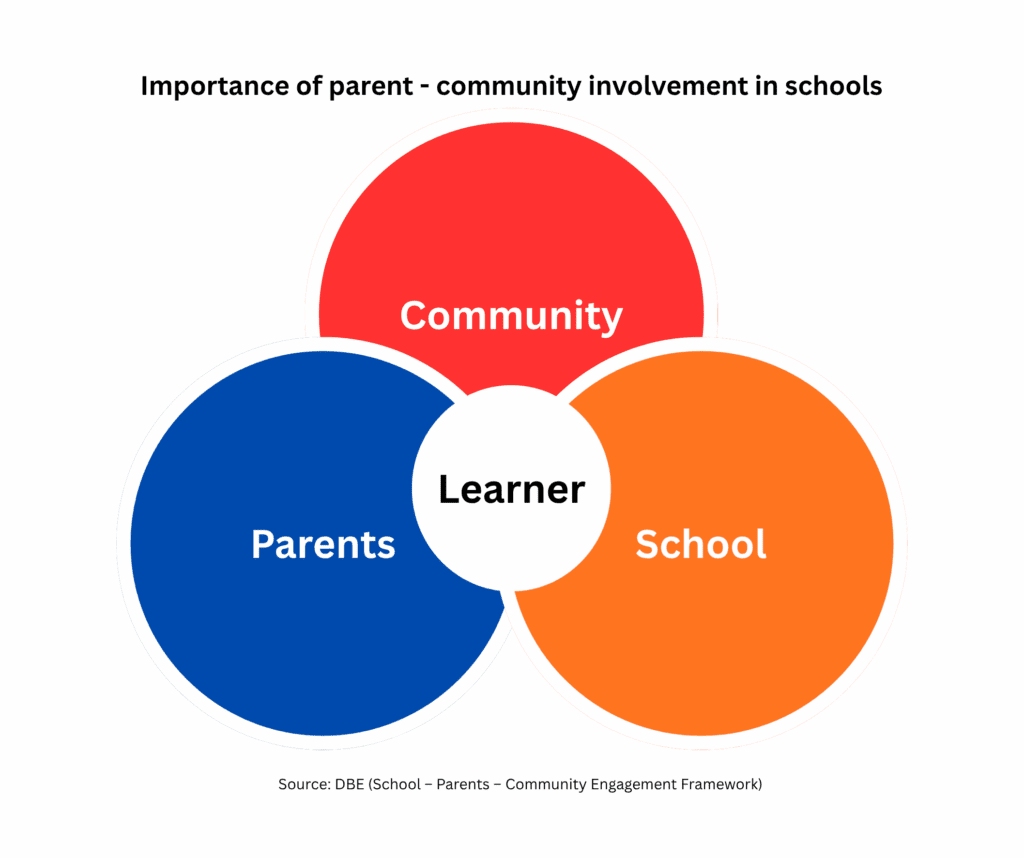
The framework, which is informed by the National Development Agenda 2030, positions parents and communities as essential, equal partners in education.
Yet many caregivers remain excluded because of linguistic and cultural gaps. In many schools, the framework notes, “assimilation remains the dominant model”, where one language, often English, dominates. “This creates distance between schools and the families they serve.” One parent quoted in the framework reflects this divide: “Sometimes I tell my child to read for me, I can’t read English nice. I don’t know if he reads the truth or what.”
While parents may want to be involved, the system often doesn’t speak their language, literally. The framework urges schools to build inclusive communication, for example, by providing interpreters at meetings, sending letters in multiple languages, or using SMS (or WhatsApp) groups, community radio and home visits. These practical steps can strengthen trust and participation.
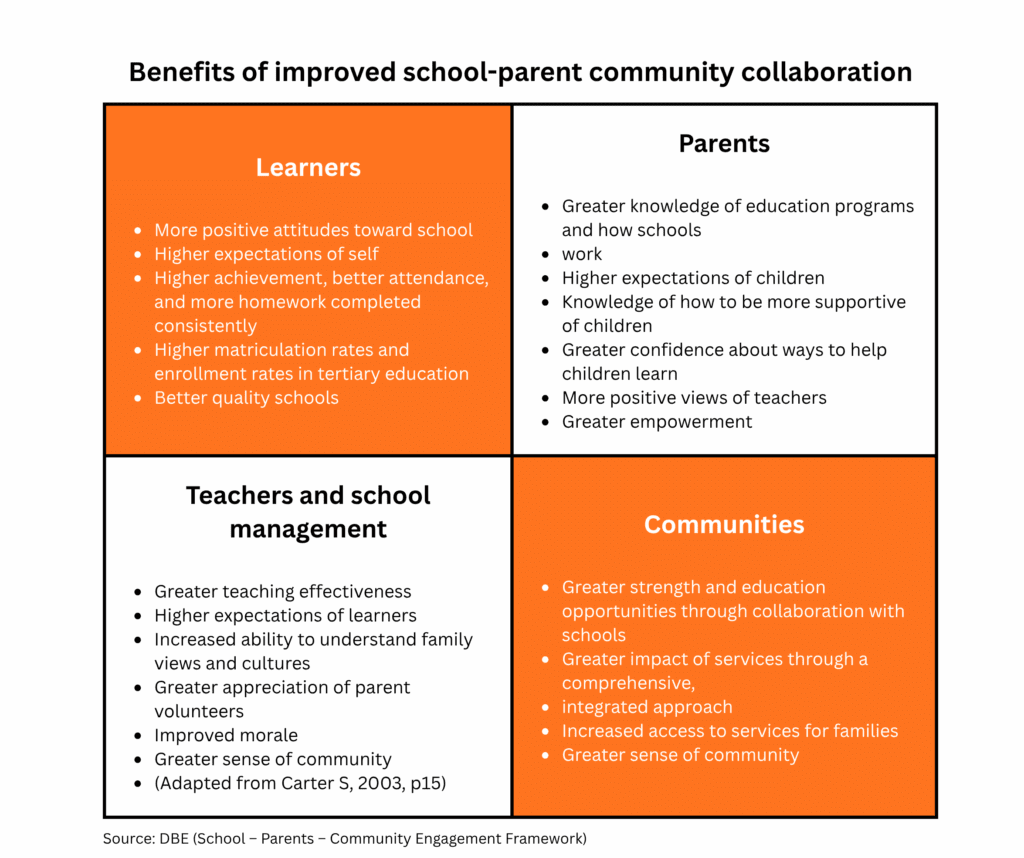
The framework’s call aligns with the country’s growing development policies, like Mother Tongue-based Bilingual Education (MTbBE), which advocates for learning that connects to the child’s home language. When parents can understand school communications, discuss homework, and participate in school life in their own language, they become co-teachers.
The framework captures this beautifully: “Cooking soup for supper becomes a literacy, maths and life skills lesson vocabulary around ingredients, maths around quantities, science around cooking, and hygiene as a life skill.”
Every home can be a classroom when learning happens in the language of the heart.
Schools have been experimenting with bilingual learning materials, such as interactive isiZulu/English and Sesotho/English calendars, not only to aid teaching but to help parents reinforce lessons at home, even if they have limited formal education.
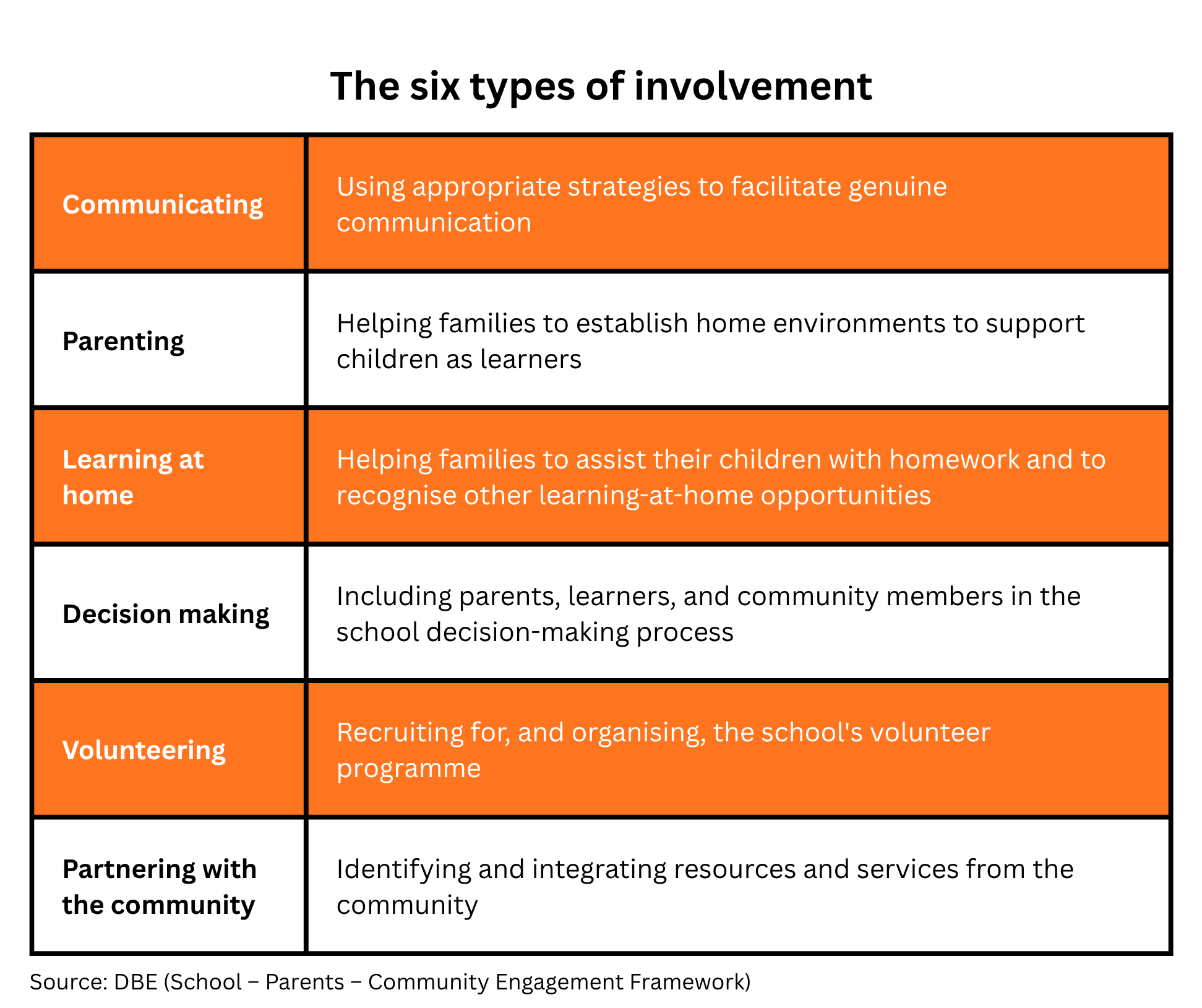
“Collaborative relationships with the wider community strengthen the ability of schools and families to support learning outcomes,” it states. This means involving faith groups, NGOs, traditional leaders, and local businesses in education, from sponsoring reading corners and mother-tongue storybooks to hosting family literacy events.
Parents speak about the highs and lows of Mother-Tongue Learning
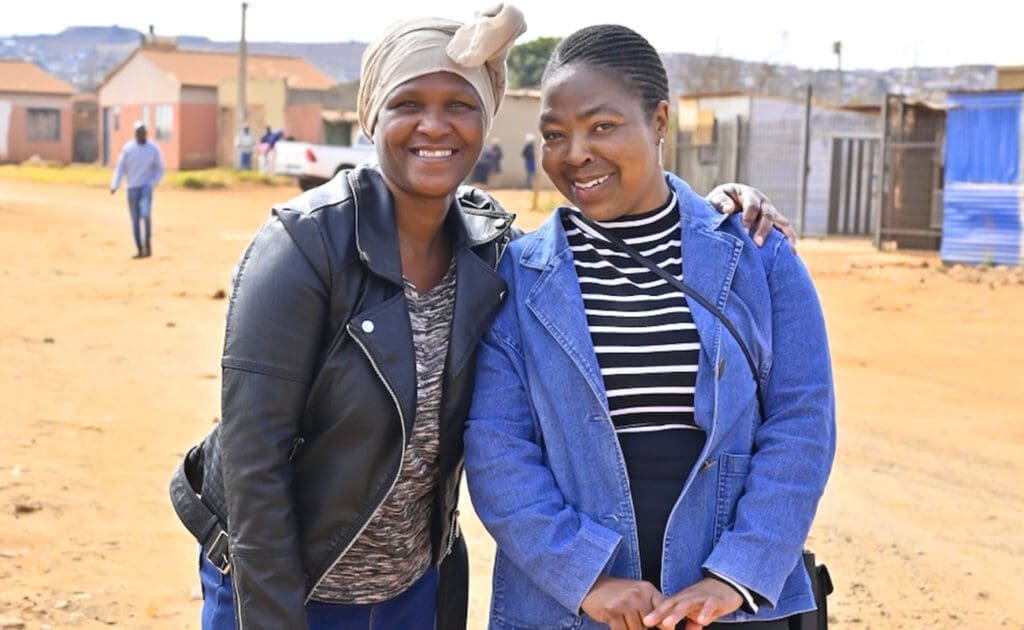
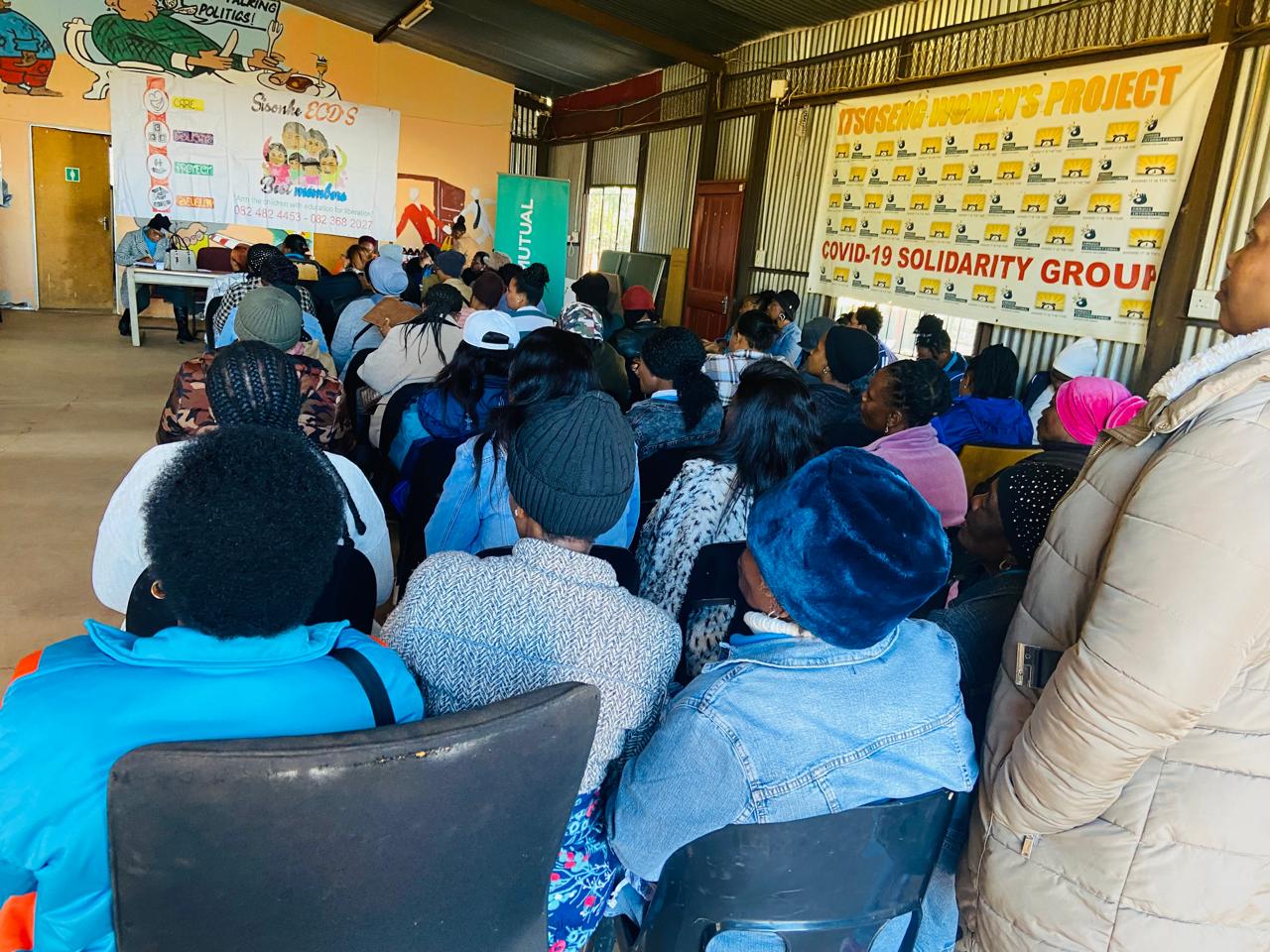
Across Orange Farm and Lenasia South, parents reveal divergent views on the language policy of learning – between preserving identity and preparing for opportunity.
The extension of Mother Tongue-based Bilingual Education (MTbBE) promises inclusion and understanding, but parents on the ground in Orange Farm and Lenasia South, are divided about how language impacts their children’s learning, revealing the tension between preserving identity and preparing for opportunity.
The Mother Tongue-based Bilingual Education (MTbBE) policy is steering classrooms toward bilingual learning, using a child’s home language as the foundation for comprehension and confidence.
The policy notes that English and Afrikaans learners have the benefit of MTbBE “from cradle to Grade 12”.
The MTbBE approach is being rolled out incrementally this year, extending mother tongue instruction beyond Grade 3 into Grade 4. It initially focuses on subjects such as Mathematics, Natural Science, and Technology.
Dineo Kane, from Mooira Park Informal Settlement in Lenasia South, recently enrolled her 4-year-old son at Uyabonelela Day Care Centre, an informal ECD based in Hospital Hills 5 to 5. She said: “I really value Uyabonelela because it’s not just about babysitting, the children are taught in English. As a Sesotho speaker, I feel it’s important for my child to learn English early; it gives him confidence and helps him to communicate with other learners. At home, we speak Sesotho to make sure that he does not forget his mother tongue.”
Benedict Ncube’s 3-year-old attends the same day care. She sees early exposure to English as a tool for confidence and connection, believing it helps children navigate classrooms where multiple home languages meet. She said: “At home we speak Xitsonga, but at school my child learns in English. It helps because most of the children speak isiZulu or Sesotho, so English brings everyone together. I still want my child to know his mother tongue, but I believe English opens many doors. These days, English is needed everywhere, at varsity, during interviews and in the workplace, so it’s important to know and understand it.”
For some, the growing focus on mother-tongue instruction feels like a step backward because English is seen as the language of progress and opportunity. Julia Tshawe, mother of Amahle, a Grade 3 learner at Laus Deo Primary School in Orange Farm Ext 6a, feels her daughter is being held back. “I’m not happy with my child being taught in her mother tongue. I raised the issue during a parents’ meeting, but it wasn’t addressed. They told us it’s the government’s decision.”
Tshawe believes English is more inclusive and prepares learners for future opportunities. “At universities and during job interviews, they must use English. Starting to learn English later delays them and makes it hard for them to express themselves.” She also noted that learning at school often clashes with what children learn at home. “At home we count in English – one, two, three – but at school they count in the mother tongue. It confuses them. Even learners in Grades 4 to 7 still struggle with English. If they started earlier, it would be much better.”
Puleng Mosikidi, whose daughter, Orefa, is in Grade R at the same school, said that the challenge was not only about which language is used, but about how well children are supported when learning in an unfamiliar language. “I would prefer that learners are taught in English because some children, like my daughter, take time to understand. At home, she speaks Tshivenda, but at school she learns in Sesotho, it’s very hard.”
Mosikidi believes educators should offer extra support for struggling learners. “The teacher should start extra lessons for those who find Sesotho difficult. I’m planning to transfer my daughter because it’s too hard for her,” she said. Despite her frustrations, Puleng values her home language. “If there was a school that teaches in Tshivenda, I’d be happy. Mother tongue is important – when children visit their villages, they must be able to communicate. They should know where they come from to understand where they’re going.”
Some parents are finding a balance, embracing both English and home languages. For Khethiwe Khumalo, whose two-year-old son attends Raden Academy in Lenasia South Ext 1, bilingualism offers her child the best of both worlds. “I prefer my child to be taught in English because it helps him navigate life in today’s world, while his mother tongue {Sepedi} keeps him connected to his roots. Learning both helps him grow confidently and gives him the tools to thrive anywhere.” Her son started daycare aged 18 months and has had no difficulty learning in English, while speaking Sepedi about 60% of the time. “At his age, his mind is open to any language. “As he grows, I believe he will understand both better,” said Khumalo. She plans to enrol him in an English-medium primary school but remains committed to teaching him Sepedi at home. “English gives him opportunities, but Sepedi keeps him grounded. Language learning is a shared responsibility; the school does its part, and we as parents must do ours,” said Khumalo.
- This article is part of a series that has been produced with the support of the Henry Nxumalo Foundation.