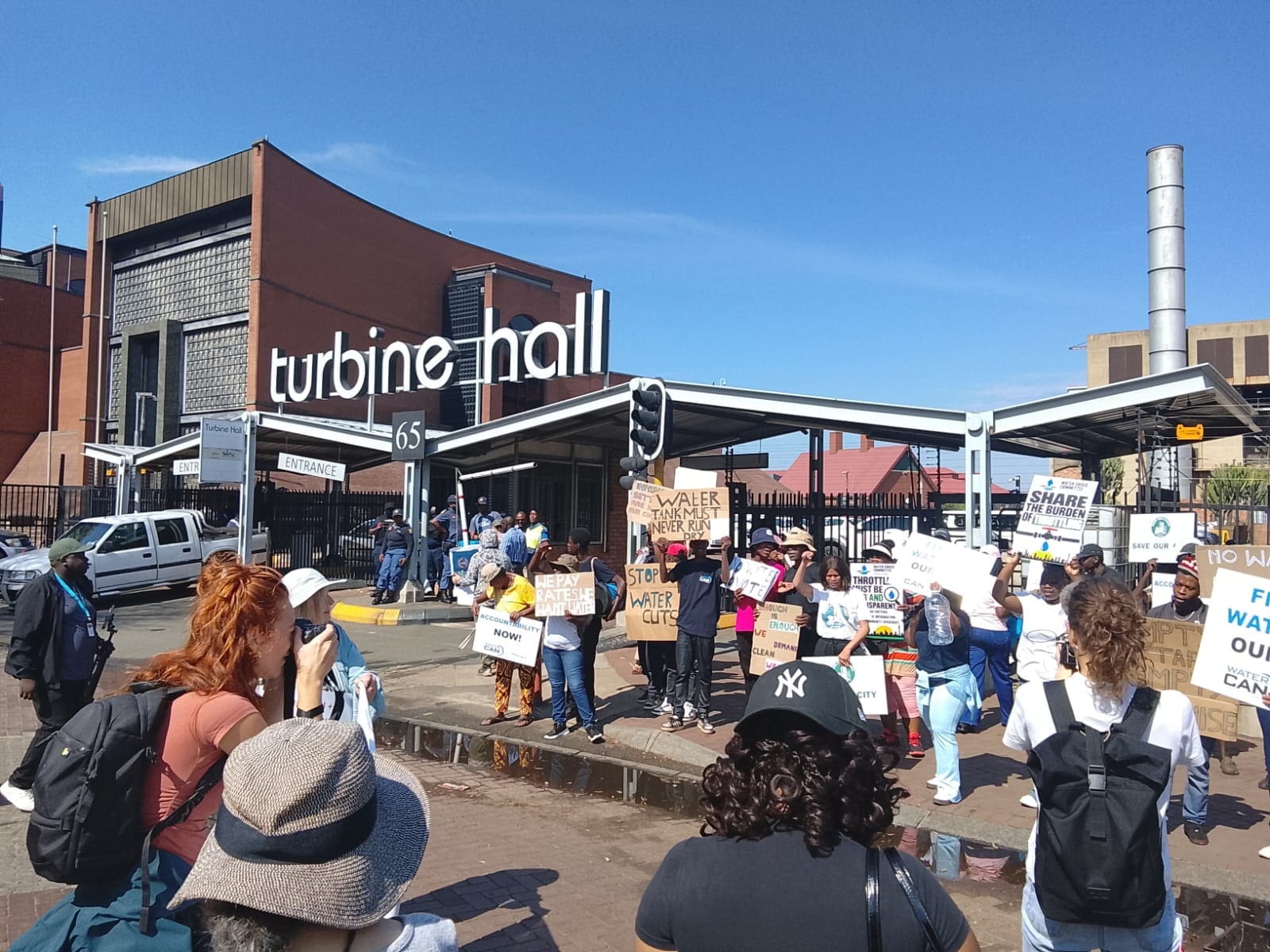
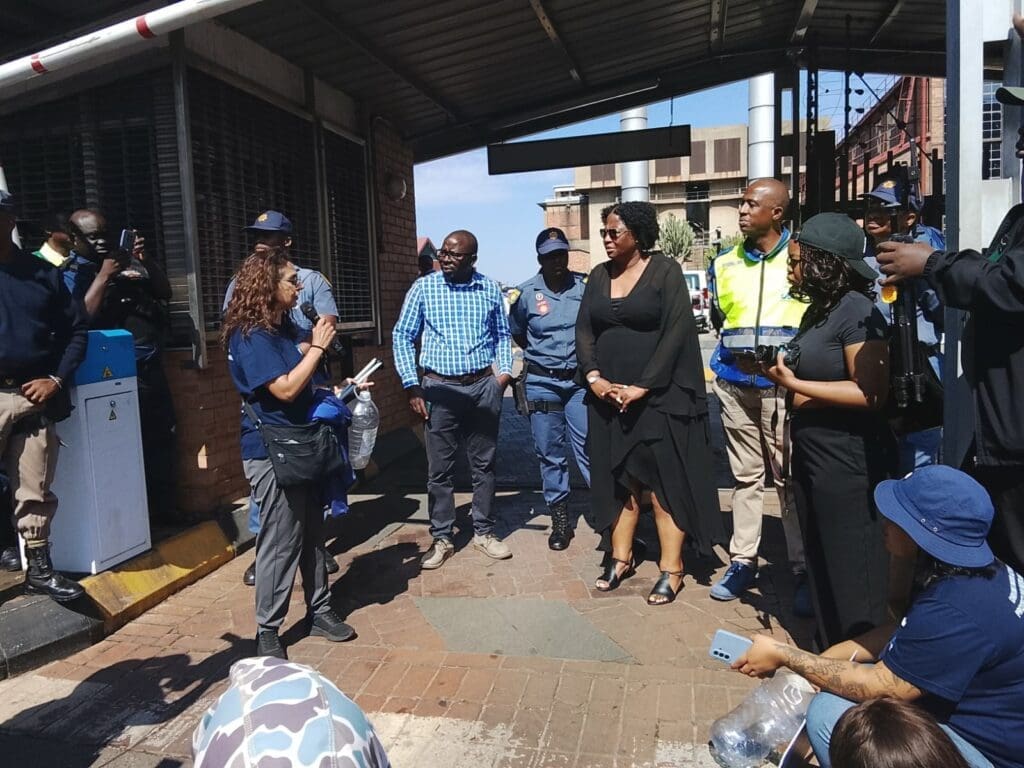
Intouch Youth Development and Community Justice, an organisation based in Orange Farm, together with the Gauteng WaterCan Movement, joined forces with WaterCan to amplify the voices of communities affected by the ongoing water crisis during a protest outside the Johannesburg Water head office at Turbine Hall. The protest took place on Monday, 2 November, with activists, community leaders and concerned residents from different parts of Johannesburg gathering to demand urgent intervention, accountability and sustainable solutions to the growing water challenges affecting communities.
As an organisation committed to social justice, community empowerment and human dignity, Intouch stands firmly with WaterCan and all affected communities in demanding access to clean, safe and reliable water for everyone. A memorandum of demands was officially handed over, calling for meaningful action, accountability and long-term interventions to ensure communities are no longer left struggling for one of life’s most basic necessities.
The message was simple, powerful and non-negotiable: Our taps are dry. Our JoJo tanks are empty. Our people are suffering.
Communities in townships and informal settlements cannot continue living with uncertainty about when the next drop of water will flow. Access to water should never depend on where someone lives or their socioeconomic circumstances.
Water is not a privilege. It is a basic human need, a constitutional right and a fundamental pillar of human dignity. Communities deserve more than promises, press statements and temporary relief measures. They deserve lasting solutions, transparent accountability and decisive action.
The protest was more than a gathering; it was a collective expression of frustration, solidarity and a demand for justice. The struggle for water is a struggle for dignity, equality, health and life itself. Intouch Youth Development and Community Justice remains committed to standing alongside communities, amplifying their voices and advocating for environmental justice and access to essential services.